Not what I expected!

It’s Friday night and I’m dancing with my daughter in the kitchen. Well, I’m attempting to dance; my daughter’s probably thinking, ‘what is he doing?’

It’s time for a final flourish, I jump, I land, crack, owww! ‘What just happened?’ The next morning, I put my swollen bruised foot on the x-ray table. The results are clear, it’s broken.

I’d never broken a bone before so I didn’t know what to expect, but I thought it would be different. I assumed it would hurt more. Don’t get me wrong, it was excruciating to stand on it. But held still, the foot felt kind of ok.

I also underestimated the healing time. In my mind, I’d be at Park Run within the month. No way! It’s now 4 months later and I’m still not there yet.

It’s not what I expected. Jesus disciples would have said the same thing about Jesus. They’d spent their lives waiting for the Messiah – God’s anointed king – to come. When he did, they found themselves constantly having to recalibrate their expectations.

His miracles, his teaching; so much more than they were prepared for. Then the cross; no one expected that. Jesus surprised and Jesus shocked. He wasn’t what they expected.

Have you ever thought about Jesus? Do you have ideas of what he’s like? Have you ever looked at the Bible to see what it says?

At our morning service on Sunday 22nd November we’re going to look at a startling truth about Jesus that we find in the Bible. It’s one his disciples struggled with and maybe it’s not what you would expect either. If you want to come along, we’d love to see you.

What do you think about Jesus?

Sunday September 14th, 2025. It’s the Whittlesey Festival. We’re there with leaflets, sweets and drinks. But also some questions; we want to know what people think about Jesus.

Over the day we carry out a survey. Thank you to the 54 people who were willing to share their thoughts. It’s not a massive number, but the results are interesting.

Question 1: What do you know about Jesus? 19% said they didn’t know much. Others said he’s in the Bible; he was a good man or someone who died and rose again. 26% said he was the Son of God or the Saviour.

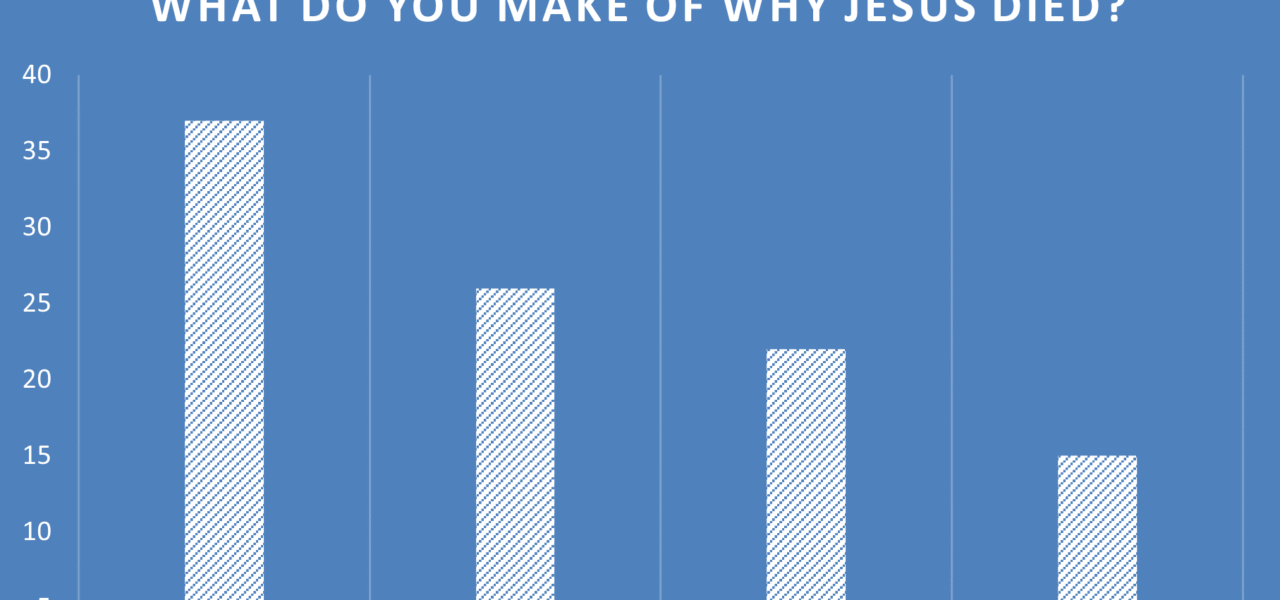
Question 2: Why did Jesus die? 11% said to set an example. 33% said he died for sins. 37% said his enemies killed him.

It’s interesting, when we think about why Jesus died, the Bible says that in some way all these answers are right. Jesus’ death is an example of love and sacrifice, and he did end up on the cross because his enemies conspired to put him there.

Yet, the Bible tells us the central reason for the cross was to die for sin, so we could be forgiven and know God. In the book of Isaiah we read, ‘He was pierced because of our rebellion, crushed because of our iniquities; punishment for our peace was on him, and we are healed by his wounds.’ Isaiah 53:5

Question 3: What do you make of the Bible’s answer to why Jesus died? 15% said it was thought provoking. 25% found it’s interesting but nothing more. 23% didn’t believe it. 37% thought it was a good thing.

How would you answer those questions? What do you think about Jesus?

If you want to know more you can get in touch

Which God don’t you believe in?

A 2020 YouGov poll revealed that 27% of people in the UK believe there is a God, 16% believe there is a higher power and 41% don’t believe in a God or a higher power. That leaves 16% not sure or preferring not to say.

These are interesting figures, yet I find I want to ask more questions to understand what they’re saying. Particularly, which God is being talked about? Which God are people saying they believe in, or which God are people saying they don’t believe in?

Is it a God who’s weak, or a God who’s strong. Is it a God who’s mean or a God who’s kind. Is it the God of Islam? Is it the God of Hinduism? Is it the God of the Bible? They’re not the same. Is it the God we think religions teach, or the God they do teach?

That’s not an unimportant question and that’s why I’m giving at talk at our 10:30am service on Sunday 19thOctober called ‘Which God don’t you believe in?’

We’re going to be looking at the Bible and asking: What God is really like? Why the Bible?

The Bible tells us about Jesus, who it claims is God who has stepped into our world. That’s a unique claim. If it’s true, which I believe it is, it means we can really know what God is like.

Do you believe in God? Come along and find out what the Bible says about him. Do you not believe in God? Why not listen and see if the God of the Bible is the same as the God you don’t believe in?

Can’t join us in person, the service will be livestreamed on our YouTube channel.

Any plans for the Summer?

Evidently July 2025 is packed full of exciting events and things to see all over the UK.

Take your pick. There’s tennis at Wimbledon and F1 racing at Silverstone. You’ve got the Henley Regatta, the Wales Airshow in Swansea or the RHS Garden Festival at Hampton Court Palace. Fancy a view of Buckingham Palace? It opens to visitors from mid-July onwards. If music is your thing, you could head up to Edinburgh for the Jazz and Blues festival, across to Birmingham for the Mela 2025 or down to London for the BBC Proms.

Want something a bit quieter? Why not head into one of the many national parks around the country. That’s my plan. I’m hoping to do the Yorkshire 3 Peaks Challenge at some point this month. You’ll know if I’ve done it when you see me walking a bit slower than normal around the town.

There are so many fun things to do, but as I think about each of these I’m struck by the fact that they’re very much short term, not long-term. They’re things to look forward to, excitement for a moment, and then just a memory. Is there nothing more long-term?

Tradition tells us that in the year 1000, officials of the Ottoman Empire opened the tomb of Emperor Charlemagne who’d died 186 years before. They found Charlemagne’s skeleton sitting on a throne with a crown on his head. On his lap was a Bible and his finger was pointing to this verse:

For what does it benefit someone to gain the whole world and yet lose his life? Mark 8:36 (CSB)

In essence, what benefit are all the short-term gains, if we don’t take care of the longer term too?

How do you feel about that question? Do you even think there is a longer term? A lot of the messages we hear today tell us that this life is all there is, so make the most of it. Yet, the Bible says there is more, and that through faith in Jesus we can have the hope of eternal life.

Are you interested in seeing what the Bible says about this? If you are, why not come along to our Sunday morning service, 10:30am at our church building on Gracious Street or get in contact at info@whittleseybaptist.org.uk

If you’d like to know more about what’s going on, you can check out the what’s on section of the website.

Why celebrate a cross?

As I sit down to write this article Easter 2025 is few weeks away. As you read these words, it will be a fading memory. As I think about Easter, I’m reflecting on the question, why the cross?

Have you ever asked that? Why do Christians make so much about the cross of Jesus? In one sense, it’s a bit strange. The cross is an instrument that the Romans used for execution. And it wasn’t quick or painless, it was excruciating – a word that means intense pain and interestingly comes from the Latin word for cross. Not ideal material for celebration.

Yet, the Bible teaches that the cross of Jesus is more than this. It’s not merely a place where Jesus was tortured and killed. It’s an event where Jesus, the Son of God, gives himself as a sacrifice to pay the price of sin. That’s a staggering claim; God himself stepped into this world, became like us and faced an excruciating death. Why? To deal with our sin.

And there’s more. Because of the cross, the Bible says people can know God. We’re told that at the point Jesus died, ‘the curtain of the temple was torn from top to bottom’ (Mark 15:38). This curtain symbolised a separation between people and God because of sin. At Jesus’ death, that barrier was torn apart. The message: Sin is dealt with and a way to God has been opened.

And then Sunday morning. The claim the Bible makes is that though Jesus died, he didn’t remain dead. Easter Sunday is a celebration of his resurrection. Is there evidence? An empty tomb, a missing body and multiple eyewitness accounts by people who saw the risen Jesus – the Bible tells us he was even seen by over 500 at one time. The cross is not just about death, it’s about life, a life we are invited to share through Jesus.

Since that first resurrection Sunday morning, the message of the cross has been celebrated. Yes, it was a place of pain, yet it was pain Jesus willingly embraced to bring hope.

It you’d like to know more about what the Bible teaches and how that could be relevant in your life, why not come along to our Sunday morning service, 10:30am at our church building on Gracious Street. It you’d like to get more details of what’s going on at the church, check out our what’s on page.

Endless Washing!

It was meant to be a simple walk on the wash, but we hadn’t accounted for the mud. The floods had mostly subsided, yet the path was still wet and squelchy. Every step sent splashes of gloopy muck flying in all directions. We were wearing wellies, but even they proved a not-quite barrier in the attempt to keep our clothes clean. The result; a fun walk, yet more washing.

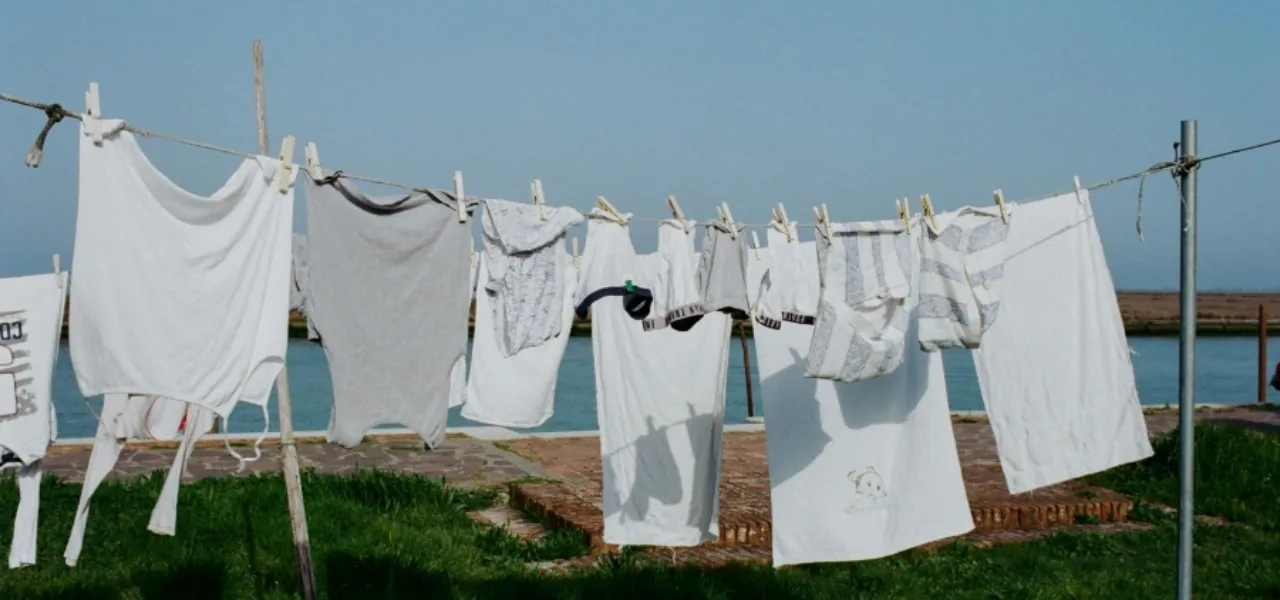
I don’t know why, but this year I’m increasingly aware of the endless loads of washing our family generates. No sooner is one load dry: there’s another load to hang up. And being winter, all this takes place inside. It seems a treat when the airers can be packed away, even if just for a few hours. Staring at the washing makes me think about the Bible and what it says concerning sin and forgiveness.

Sin has got to be one of the most uncomfortable teachings of the Bible. Sin, in Bible terms, is more than a little bit of naughtiness, it’s full-scale rebellion against God. The Bible begins with creation, God makes everything. He’s the king, yet the first people, Adam and Eve, sin. They rebel and decide they want to be in charge.

The Bible says this attitude towards God is ingrained in all of us. There’s a verse in the book of Isaiah that says, ‘all our righteous acts are like a polluted garment’ (Isaiah 64:6 (CSB)). That means that even the good stuff we do is tainted because it doesn’t come from a heart that loves and obeys God.

Now, I know not everyone will agree with the Bible at this point. You may be reading this thinking that it’s overly negative or just plain wrong. Yet, if the Bible is speaking the truth, what does that mean? Our lives are like a pile of dirty washing that needs to be cleaned and each day the dirt increases.

But how? The washing machine isn’t any good at this point. But the claim the Bible makes is that Jesus can make us clean. On the cross he died and later rose from the dead so that if we trust in him, we could be forgiven by God; washed completely clean.

If you want to know more of what the Bible teaches about Jesus and what it might mean for you, why not get in touch through our website www.whittleseybaptist.org.uk or join us at 10:30am on a Sunday morning. Our services are held at our building on Gracious Street, or you can connect via the stream on our YouTube channel.

Why didn’t I do it earlier?

July 2019, I’d just finished reading my copy of the Fen Magazine for that month and feeling a twinge of shame. Near the back was my article. I’d mentioned ‘Couch to 5k’ and my intention to get on with it. Yet, I hadn’t done anything about it.

Roll on 4 years, it’s the middle of 2023, and the situation is still the same. 3 aborted attempts and a lot of procrastination. I’d managed couch to 300m, but never got further. Every time I started running, it just hurt. So, I dialled it back to just walking, worked up from there and, eventually, managed to complete my first Parkrun 5k late in 2023.

Ever since, I’ve enjoyed trundling up and down the Green Wheel, seeing familiar faces and trying to get just that little bit quicker as the days go by. I feel healthier, I feel fitter, and the fresh air has done me good. I keep asking; ‘Why did I keep putting it off? Why didn’t I do this earlier?’

Have you ever considered reading the Bible? Maybe you received a small New Testament from the Gideon’s when you were at secondary school. It’s sat on your shelf, and you’ve thought, ‘I’ll have to read that one day.’ Maybe you came across a Bible when clearing out some stuff and you wondered if it would be worth reading.

Have you ever thought about coming to a church service and finding out more about Jesus? Maybe you’ve walked past a church building and wondered what happens on a Sunday and whether it’s got anything to do with you. Maybe you went to Sunday School as a child and thought it would be good to go again at some point.

My experience with running has taught me that if something’s worth doing, it’s better to do it sooner rather than put it off. If you wait, you’ll only regret it.

And if what the Bible says is true; Jesus is the Son of God; Jesus is the Saviour of the world; then do you think reading it and discovering more of Jesus might be worth doing?

If you want to know more of what the Bible teaches about Jesus and what it might mean for you, why not get in touch through our website www.whittleseybaptist.org.uk or join us at 10:30am on a Sunday morning. Our services are held at our building on Gracious Street, or you can connect via the stream on our YouTube channel.

Joy to the world

Christmas equals joy. You see it on a child’s face as the decorations go up. You hear it as the town lights are switched on for the first time. You feel it as the pile of presents slowly grows under the Christmas tree. You taste it with that first mouthful of Christmas dinner. This is a time of celebration, of happiness and joy.

Except when it isn’t. The present gets opened and it’s not what you wanted. You don’t know how, but this year the roast potatoes are burned to a crisp and the turkey just won’t cook. Frustration, not joy! Then, there’s the real pain of loneliness, of missing those who shared memories of Christmas past. Christmas can also equal sadness.

On the night that Jesus was born, the Bible tells us an angel lit up the sky outside Bethlehem and made this announcement:

‘Don’t be afraid, for look, I proclaim to you good news of great joy that will be for all the people.’

That claim is huge: Joy for all people. That means people everywhere and people in every situation. For those who look forward to putting up the decorations, and those who find it tough. Those surrounded by family and friends, and those on their own.

What does this mean? The celebration of Christmas isn’t always joy for everyone; we know that. But the Bible says the message of Christmas can be joy for anyone.

The angel continues:

Today in the city of David a Savior was born for you, who is the Messiah, the Lord.

What is this message? It’s the message of Jesus. It’s the message of Jesus who came as a saviour and a king. It’s a message about God stepping into the world to bring healing and hope.

The angel announces this as a message of great joy. I’m sure the he would have approved of Isaac Watts’ popular Christmas carol, ‘Joy to the world! The Lord is come; Let earth receive her king!’

We, like many churches across the Fens, are having several special Christmas services during December. Why not come and join us, or a church more local, and discover Jesus and the joy he can bring.

For more details, check out our events page

Hope Explored

Hope is an interesting word. It often begins as a wish or desire, a best-case scenario or a dream of an ideal future. ‘I hope to have that holiday.’ ‘I hope my football team will win the league.’ ‘I hope the washing machine won’t break.’ ‘I hope I get something good for Christmas.’

It doesn’t always remain as just a wish; it can progress to possibility. Promises are made. Funds are saved. Games are won. What started as an idea begins to crystallise into something that actually might happen. Hope’s final stage is when it is at its best. What started as a dream becomes a certainty. The tickets are in your hand. Your team is pulling ahead and uncatchable. This thing’s happening and you can look forward to it.

At its heart, the Bible is a message of hope. It’s a message about Jesus – Jesus who came to save. It’s about Jesus who came to transform lives and change futures.

This is not the uncertain kind of hope; not just the possibility of something better; this is cast-iron guaranteed hope rooted in the birth, the life, the cross, the resurrection and the return of Jesus. And best of all, the Bible says it’s available to everyone.

For the first three Tuesday evenings during November, we’re putting on a course called ‘Hope Explored’ which will be held at our church building on Gracious Street. It’s an opportunity to see what the Bible says about the life, death and resurrection of Jesus and the impact they can make on our lives today and into the future. Do these historical events really make a difference in 2024?  Can Jesus really bring hope, peace and purpose into our lives?

Each session includes time to talk and discuss as well as the opportunity to look at the Bible together and hear some teaching on what it says. You don’t need to know anything about Jesus or the Bible to come along, just a willingness to explore and see what it says.

If you want to join the course, it would be helpful if you could let us know but if you’re not able to, it’s fine to just turn up on the night. Times and dates are below and can be found on our events page.

When panic sets in?

I’m standing rooted to the spot, on a metal platform about 50 meters above the forest floor. It’s suspended by thin metal cables that do nothing to even out the constant swaying as people move about. To make it worse, the metal is a grid full of holes; with every step I feel like I’m staring into an abyss, an abyss that makes my knees buckle and my stomach turn somersaults.

Welcome to the Eden Project, an exhausted clay pit that was regenerated into part tourist attraction and part science experiment. The location of my torture is one of the Biomes, the golfball-like structures, where a viewing platform gives a unique bird’s eye view of the rainforest plants below.

I’d made it up the suspended metal staircase and gradually inched my way to the middle. Scared of heights, suspended in the air on a platform where every micro-wobble was communicated through my feet and prodding at the anxiety centre of my brain, I couldn’t get down quickly enough.

Why does stuff like this raise a panic in me? Why do I find myself battling anxiety in these situations? That’s a question I’ve asked myself so many times. The answer I keep coming back to is simply this – I don’t feel secure. Fear rises because I’m overwhelmed by all the things that might happen and the reality that I am not in control.

But do I need to be? I’ve been reflecting recently on the words of one of the songs in the Bible. Psalm 46 starts like this,

‘God is our refuge and strength, a helper who is always found in times of trouble. Therefore we will not be afraid, though the earth trembles and the mountains topple into the depths of the seas.’

If this is true, then if I rest in God, I don’t need to be afraid, I don’t need to panic when I realise I’m not in control. Why? Because he’s big enough to deal with it and he’s got the situation under his control. I’m so thankful for that.

This month we’re going to be thinking about how Jesus brings light into some of the areas of darkness we face. If you want to come, we’d love to see you. The services will also be streamed live on YouTube so if you’d prefer you can catch them there.

Light?

My eyes spring open and I look at the clock. It’s still dark, but what’s the time? 1am? 2am? 3am? It’s not always the same time of night, but I’m awake and getting back to sleep is going to prove difficult.

That was my experience for a lot of my teenage years. No problems getting to sleep in the first place. No difficulty sleeping in when I got the chance – I’ll just pause and remember those Saturday breakfasts at 11:30 in the morning! Yet, so often I woke up in the middle of the night and just lay there for what seemed like hours.

I also remember being scared. I had a chimney breast running through my room and the wind would often whistle down it. It was only quiet, but you can hear everything at night. I can’t tell you how many times I convinced myself a burglar was walking through the house.

It wasn’t just sounds. Bags on top of the wardrobe became monsters ready to pounce. A belt left on the floor was a snake ready to strike. Once the door had been opened on my imagination there was no stopping the dangers that I faced.

That was until I braved the snake-infested floor, quickly rushed past the monster-ridden furniture and switched the light on. In one millisecond, the darkness was filled with light and all fear dissipated in a flash.

Light makes such a difference in our lives. Just think, which do you prefer? Dark winter mornings, or bright summer days? The gloom of a drizzly day or the brilliance of blue sky and sunshine? Light lets us see things as they are. Light changes our perspective. Light brightens our mood. It brings transformation.

What’s interesting is that when Jesus came, he used light as a metaphor to describe himself and his purpose. In John 8:12 Jesus says, ‘I am the light of the world. Whoever follows me will never walk in darkness.’ What’s Jesus saying? He’s making a claim that he can turn the darkness of this world into light.

I know it’s a few weeks away, but I wanted to let you know that in October we’re going to be thinking about how Jesus brings light into some of the areas of darkness we face. If you want to come, we’d love to see you. The services will also be streamed live on YouTube so if you’d prefer you can catch them there.

Look up!

I’ve spent most of the last two weeks in the far away land of Wales. A land of mountains and valleys. Very different from the flats of the Fens.

I don’t know about you, but I confess I love being in the mountains. The longer I live in the Fens, the more my muscles scream at being asked to take on an incline. Yet, once they’ve given up their complaining, there’s almost no place I’d rather be.

Seven years ago, we moved to Whittlesey. I remember at the time commenting on the lack of mountains. The reply was swift, ‘yes, but we’ve got big skies.’ Standing on the wash looking at the red sky flaming as the sun rises is an awesome sight. Or standing in the same place on a clear night surrounded from right to left, front to back, by the huge dome of the sky, that’s something special.

It struck me this week that whether we’re in a place with mountains or somewhere flat, in both locations, there are things around us that lift our eyes upwards.

That made me think of Psalm 121. Here, the writer speaks about looking up to the hills in a time of difficulty. As he does so it reminds him of God. A God who is vast, but also close. A God who is powerful, but also caring. A God who can help.

A friend of mine used to fly planes in the US. One night he was out flying and a storm closed in around him. Enveloped in greyness and not able to see, the panic began to set in. Then he remembered that above him were all the instruments he needed to find his way. All he had to do was look up.

That’s the encouragement at this point in the Bible. We’re being told, look up and see there is a God who is able and willing to help.

When you look up, what do you see? Is it just the physical universe, is that all that’s out there, or is there something more?

I’m taking a short break from writing these articles and should be back in the New Year. If you’ve got any questions or want to know more about God during this time, please do contact us through our contact page or join us on a Sunday at 10:30am or 6pm at our building in Gracious Street.